
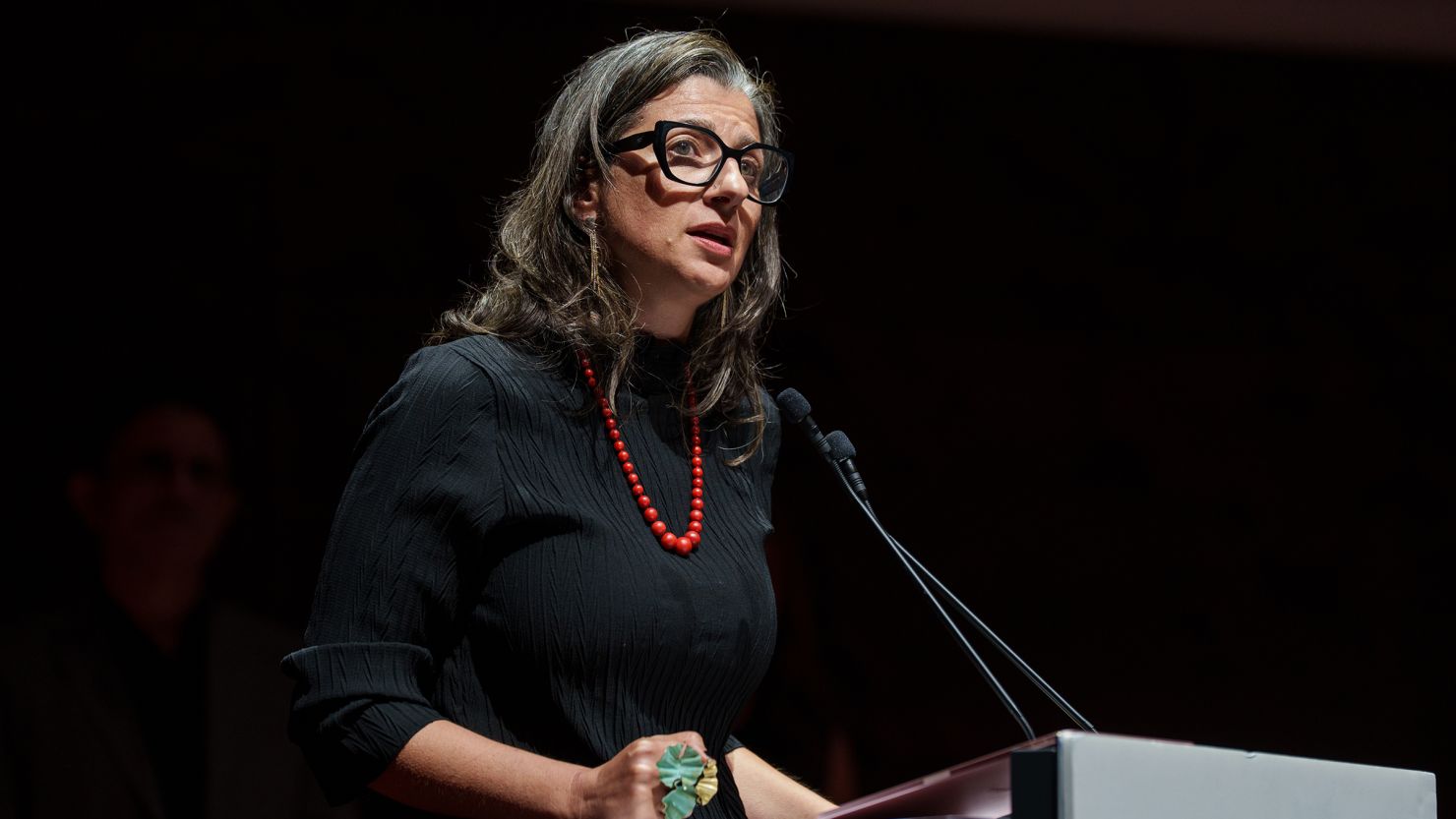
A fresh row over free speech has erupted after University of Adelaide cancelled a high-profile literary festival event featuring UN Special Rapporteur on the occupied Palestinian territories, Francesca Albanese.
The decision has drawn sharp criticism from organisers and speakers, who accused the 152-year-old institution of “crumbling in fear.”
The event was part of Constellations: Not Writers’ Week, a pop-up literary festival that emerged following the cancellation of Adelaide Writers’ Week. It had been scheduled to take place at the university’s Elder Hall on Thursday evening.
Organisers said they were informed on Monday that certain requirements had not been followed and that the booking had been cancelled. A new venue, Norwood Concert Hall, has since been secured to accommodate 650 in-person ticket holders. Albanese, a human rights lawyer, is expected to join the discussion via video link alongside Professor Henry Reynolds and Dr Lana Tatour to discuss settler colonialism.
Louise Adler, former director of Adelaide Writers’ Week who headlined another festival event on Sunday, criticised the university’s move.
“Welcome once again to Moscow on the Torrens,” she said in a statement.
“Universities, the arts, and the media were once respected as sites where controversial ideas could be tested. That is no longer a given. We are witnessing relentless campaigning by sectional groups and their influence over politicians … the conversations possible in the public square are being seriously impoverished.”
The event was organised by the Association for the Promotion of International Law, which said the university justified the cancellation by claiming the booking “did not proceed in accordance with due process.”
In a statement, Adelaide University said it was unaware of the “external event” until last Friday.
“Following further exploration of the matter, the university could not accept the venue booking, as it did not go through the required review and approval process in accordance with the required policy and procedure,” the statement said.
“Unfortunately, this left the university with no other choice other than to advise the organisers that it could not provide the necessary support, ensure the safety, respect and comfort of those attending or deliver the quality in keeping with the university’s standards when it comes to public events of this size and scale.”
However, APIL disputed the university’s account, saying it first contacted the institution on February 3 and worked with Elder Hall management for several weeks before submitting a formal booking on February 20.
“At no stage, until early this week, were any issues of due process raised,” an APIL spokesperson said.
The cancellation follows a report in The Australian newspaper suggesting that providing a platform for Albanese — who has been vocal in calling for an end to what she describes as the “genocide” that Israel is waging against Palestinians in Gaza — could be seen as defying US sanctions.
In July, the administration of former US President Donald Trump placed Albanese on the US Treasury’s sanctions list. US Secretary of State Marco Rubio accused her of engaging in “lawfare” and “political and economic warfare” against US and Israeli interests.
“Albanese has spewed unabashed antisemitism, expressed support for terrorism, and open contempt for the United States, Israel, and the West,” Rubio’s July 9 statement announcing the sanctions read.
APIL accused Adelaide University of bowing to media pressure.
Chris Sidoti, a member of a UN independent commission and facilitator of the panel discussion, said the sanctions argument was an attempt to “intimidate,” noting that Albanese continues to speak at universities around the world.
“For Adelaide University to crumble in fear of possible criticism by imposing a regime of censorship in Australia is reprehensible,” Sidoti said. “A university incapable of upholding free speech no longer merits to be called a university.”
In its statement, Adelaide University said it “prides itself on being a place where event attendees are welcomed and where the exchange of ideas can happen freely.”
About The Author