
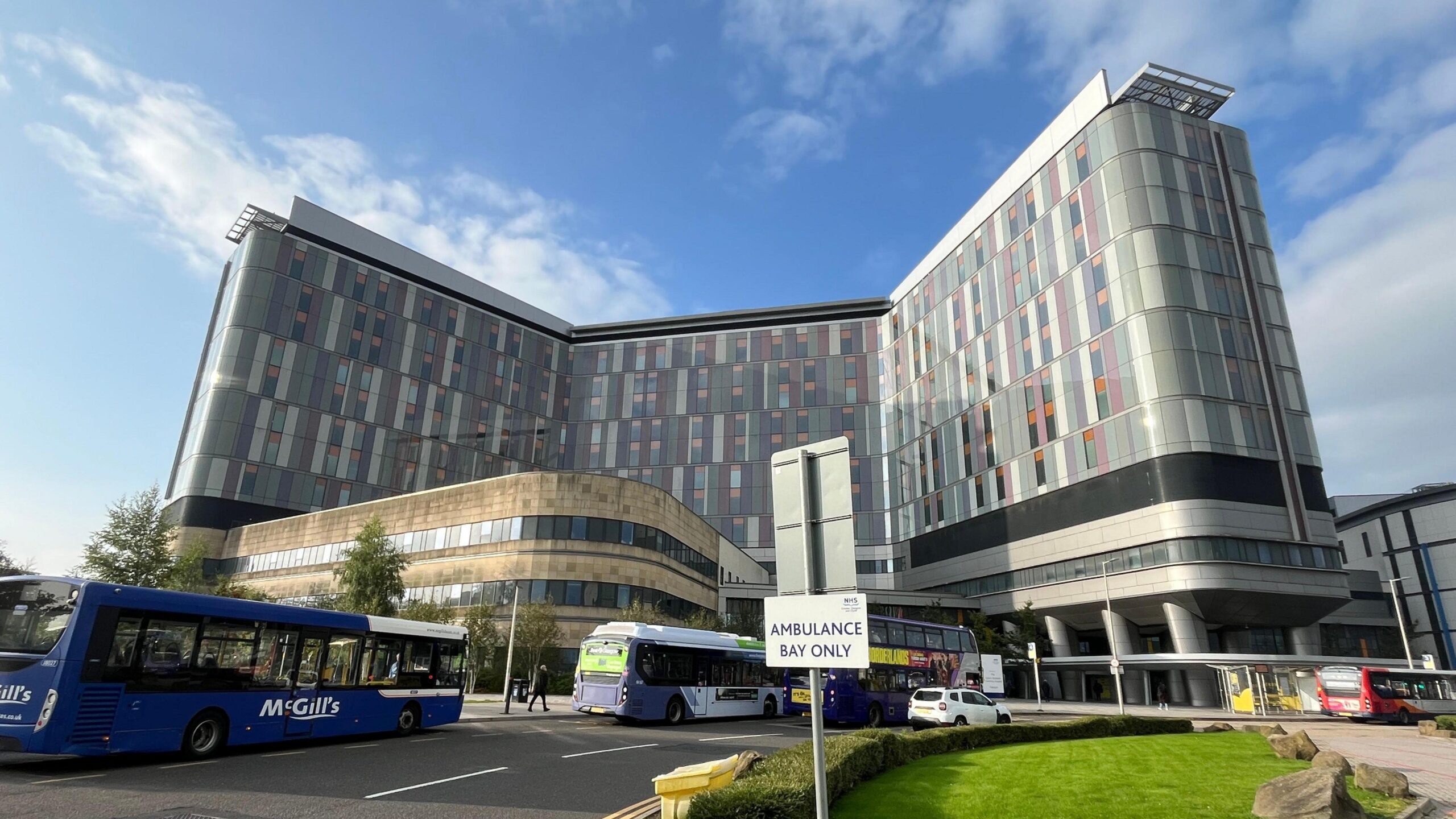
Glasgow’s Queen Elizabeth University Hospital is facing fresh safety concerns after mould and water leaks were discovered in its adult bone marrow transplant (BMT) unit, forcing the partial closure of the ward. The development comes despite assurances from Scotland’s First Minister that the hospital is safe.
The £1 billion hospital, one of Europe’s largest, opened in 2015 and has long been plagued by issues with contaminated water and ventilation systems, which have been linked to patient deaths over the past decade.
Sky News reports that several rooms in Ward 4B have been closed and patients relocated following the discovery of mould and water ingress in clinical areas. The Scottish government confirmed it was aware of the incident.
Professor Hugh Pennington, emeritus professor of bacteriology at the University of Aberdeen, said the ward “is not safe” for bone marrow transplant patients, whose weakened immune systems make them highly vulnerable. “Any form of mould could kill these patients,” he warned, calling for the ward to remain closed until repairs are complete.
The issues echo findings from a 2024 public inquiry that reported “dirty water ingress and damp material” in the BMT ward, posing “a real danger to high-risk patients.” Bone marrow transplant patients rely on near-sterile conditions and tightly controlled ventilation to stay safe.
Andrew Slorance, a former Scottish government official, died in 2020 after a stem cell transplant in Ward 4B. His widow, Louise Slorance, said the latest revelations show the ward remains a “fatal risk.” She criticised government assurances that the hospital is safe, saying: “Either the Scottish government is not informed or has ignored the problem to protect the hospital’s reputation.”
NHS Greater Glasgow and Clyde said affected rooms have been sealed off as a precaution, with additional infection control measures in place. The health board did not disclose how many rooms are closed or when they will reopen.
Professor Pennington said the problem is longstanding and must be addressed immediately. “This part of the hospital is not safe, and operations should stop until the issue is resolved,” he said.
The hospital’s water and ventilation systems have been under scrutiny for years, with police and prosecutors conducting a corporate homicide investigation into deaths potentially linked to the environment. Earlier this year, the health board issued a “full and unreserved apology” after acknowledging that some infections were likely connected to the building.
A spokesperson for the health board said: “Patient safety remains our top priority. Since the hospital opened in 2015, we have faced challenges linked to the original build quality. Comprehensive remediation programmes are in place, and safety is actively managed every day through rigorous testing of water and ventilation systems, especially in wards caring for vulnerable patients.”
ALSO READ: University of Aberdeen Staff Announce Strike Dates Over Job Cuts Dispute
About The Author