
Western Michigan University will receive $819,000 in federal funding to strengthen aviation workforce training at its College of Aviation, following the passage of a new appropriations law.
The funding comes at a time when the aviation industry faces a shortage of aircraft technicians and other skilled professionals. According to Dr. Raymond Thompson, dean of the College of Aviation, the support will help the university increase the number of qualified graduates and strengthen the talent pipeline for industry partners.
Western’s flight program is already ranked among the best in the United States, and university officials say the new funding will elevate aviation education and workforce development efforts. The funds will be used to acquire essential training tools, including simulation software, maintenance training simulators and cockpit electronic trainers. New equipment will also support the college’s uncrewed aerial systems operations certificate program, which the university is considering expanding into a full Bachelor of Science degree.
Thompson noted that Michigan has a significant aviation economy and said the university aims to prepare graduates who are highly sought after by the aerospace industry. He also credited Gary Peters for advocating for the funding in Congress.
University President Russ Kavalhuna expressed gratitude for the senator’s support, saying the funding recognizes Western Michigan University as a leader in aviation education. He added that the investment will help modernize training with advanced curriculum and technology, attracting the next generation of aviation professionals.
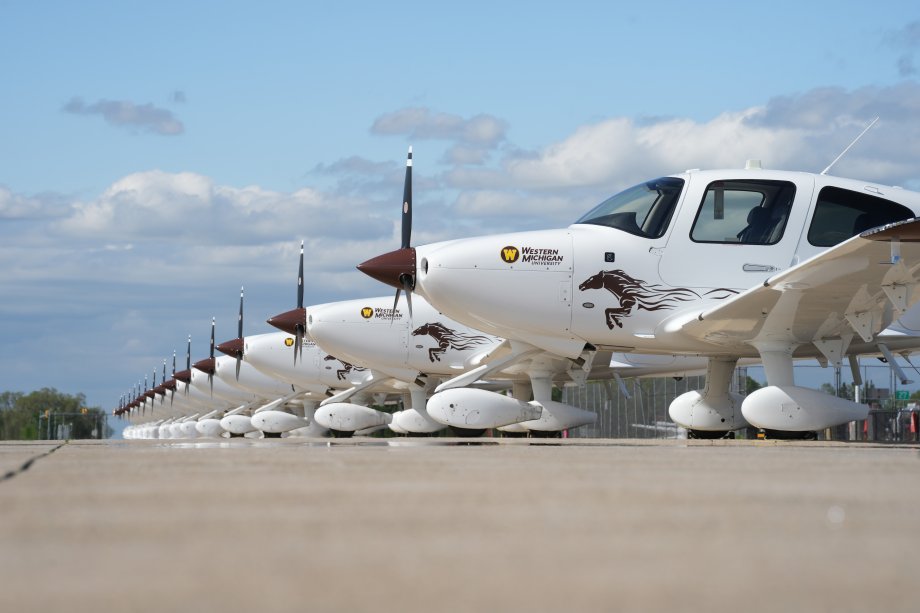
A recent report by Boeing projects a global demand for 660,000 new pilots and 710,000 maintenance technicians over the next two decades. In response to growing workforce needs, the College of Aviation is working to expand enrollment and align its curriculum with industry demand. Planned initiatives include developing stackable credentials such as Federal Aviation Administration dispatcher certification, uncrewed aerial systems training and aviation supply chain programs, expanding the use of virtual and augmented reality for training, enhancing aviation maintenance technician training equipment, and operating a modern fleet that includes Cirrus TRAC20 G7 training aircraft.
The federal funding will also support recruitment and outreach efforts aimed at encouraging more young people to pursue careers in aviation.
About The Author