
The University of Texas at Arlington (UTA) has opened a new research hub that uses artificial intelligence and data science to address some of the most urgent challenges facing modern agriculture.
The Smart Agriculture Research Center (SARC), developed in partnership with the U.S. Department of Agriculture’s Agricultural Research Service (USDA-ARS), focuses on using advanced technology to strengthen food systems, improve sustainability and help farmers respond to biological and climate threats.
The center was launched against the backdrop of recent outbreaks of highly pathogenic avian influenza (HPAI), commonly known as bird flu, which swept through poultry farms across the United States. The outbreaks led to the loss of millions of egg-laying hens and contributed to rising egg prices, highlighting the vulnerability of food systems and the need for better prediction and response tools.
“Agriculture is essential to society, yet it has historically seen less integration of artificial intelligence compared to other industries,” said Jianzhong Su, a professor of mathematics at UTA and co-director of SARC. “UTA’s strength in technology and data science puts us in a strong position to help modernise agriculture in Texas and beyond.”
SARC officially opened in August 2025 and supports agriculture-related research across the UTA campus through four main pillars. These include providing AI and data tools for agricultural research projects, supporting faculty working in agriculture-focused studies, securing major USDA and external research grants, and serving as UTA’s main link to external partners working on sustainability and global environmental issues.
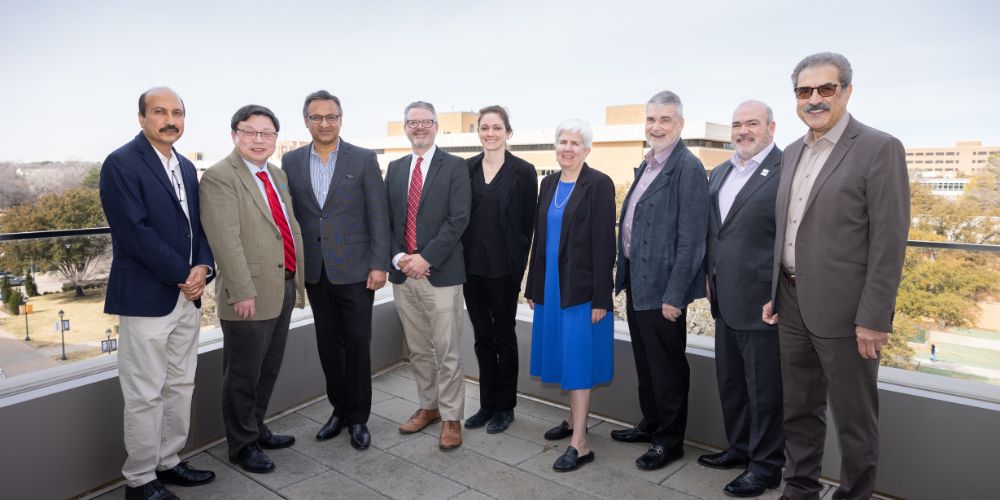
The center is jointly led by Dr Su and Gautam Das, a professor of computer science and engineering, and involves more than 20 faculty members from science and engineering disciplines.
On February 9, UTA and USDA officials attended the center’s formal opening ceremony in Arlington.
“The work being done at SARC will turn interdisciplinary research into practical solutions that strengthen our region and drive progress worldwide,” said Kate Miller, UTA’s vice president for research and innovation. “It reflects both our long history and our forward-looking vision.”
Backed by growing federal investment, the center brings together UTA researchers, students and USDA-ARS scientists to apply machine learning to real-world problems. Research areas include predicting plant diseases, assessing soil health, studying the environmental impact of farming practices and forecasting outbreaks of animal diseases such as HPAI.
“This center is UTA’s response to the national call for climate-smart agriculture and more resilient food systems,” said Scott Miller, UTA’s associate vice president for research and innovation. “Our goal is to ensure that innovations developed here can be scaled to benefit the entire country.”
Students play a central role in the center’s work through a USDA-supported summer research programme. Each year, between 20 and 25 undergraduate and graduate students take part in an eight- to 10-week programme focused on federal agricultural research projects.
The students, mainly drawn from mathematics, computer science, engineering and science disciplines, work in small teams under the guidance of UTA faculty mentors and USDA-ARS scientists. Their projects use artificial intelligence and machine learning to analyse agricultural data and develop practical solutions.
Research topics range from predicting plant diseases and studying weather impacts on crops to analysing the environmental effects of fertilisers and pesticides and developing tools to monitor livestock and poultry health.
One of the newest areas of focus is the prediction of bird flu outbreaks. Researchers are developing models that collect publicly available outbreak data and produce short-term forecasts. These tools could help poultry producers take early preventive steps, such as improving biosecurity and adjusting farm management practices, to limit the spread of the virus.
Although students carry out their work at UTA, they collaborate remotely with USDA scientists across the United States and take part in site visits to agricultural research facilities. The programme gives them exposure to national research networks and helps build skills needed for future careers in AI-enabled agriculture.
UTA faculty and USDA partners are also involved in additional collaborative projects worth more than $5.5 million in external research funding.
About The Author